
~ note: for a better viewing experience, read this on a computer — its divided into three separate columns for simultaneous viewing of story, pictures, and footnotes. ~
What does a winemaker actually do?
It recently came to my attention that most people don't actually know what a winemaker does (and I don't know if I totally knew until I started working on this project).
Sure, we make the decisions that shape the wine. But in my experience, even sommeliers use a lot of buzzwords that aren't that helpful to the common fellow. And the decisions themselves are a combination of planning and improvising, with the weather, the fruit, and the calendar all occasionally forcing your hand.
So I'm trying something new: a diary of the events and decisions I've made with my wines this harvest, and how I'm thinking them through as they happen. I did my best to add a reference anytime I use technical or wine-nerd language — the far right column of text in yellow is not part of the story and can be ignored unless you are curious.
The plan
I went into harvest with an initial plan (that turned out to be impossible to complete), so I've shifted gears slightly (figure 2). In an ideal world, I’ll end up with ~70 cases of 5 different wines:
The traditional ones: Grüner Veltliner and Riesling – two classic white wines.
The experiments: this is where it gets fun. My goal is to take grapes most people shrug at and turn them into something worth trying.
A rosé made from Cayuga White
An orange wine blend of Vignoles, Valvin Muscat, and Seyval Blanc, made two ways: still and sparkling
Wait, orange wine? Nope, no oranges involved. Its white wine made the way red wine is made: instead of pressing the juice off right away, you let it ferment with the skins. That gives it an amber color, a little grip, and a lot more aroma than a regular white [1].
Orange wine and hybrid grapes are a reasonable match that hasn't been capitalized on yet. Pour someone a Chardonnay or a Pinot Noir and they already know what it's "supposed" to taste like. People drinking orange wine or hybrids mostly don't come in with that checklist. With no textbook version to measure against, these low-expectation grapes are the perfect place to experiment [2].
Then the weather had other ideas
This fall was humid. Humidity brings botrytis (figure 4) in the finger lakes, a mold that rots grapes right on the vine [3]. It showed up on my Vignoles and Cayuga White first.
Botrytis can be a great thing for wine! Under the right conditions, it shrivels the fruit like raisins, concentrating sugar and flavor (Sauternes and Tokaj wines are made via controlled Botrytis on the grapes). But when the weather is too humid, the mold can break the skins and let in yeast and bacteria that rot the fruit into vinegar. That's called sour rot.
When your fruit starts rotting, you don't get to wait for the perfect moment. You pick, and you roll with whatever you've got. So both grapes came in early, and every decision after that was about making the most of it.
Vignoles: too much of a good thing (acid)
The problem
The Vignoles had to be picked very, very early. When I ran the basic chemistry, the acidity was through the roof: 18 grams per liter at harvest, and still about 14 grams per liter after skin contact ([4], Figure 5). Most finished white wines land somewhere around 6 to 8. So yeah, it's tart.
Why I'm not panicking
High acid sounds like a disaster, but I've got three things working in my favor.
Sparkling wine actually wants high acid. Grapes for sparkling wine are picked early on purpose because they benefit from the extra acidity [5]. Blended with the other two grapes, this acid can land right where a sparkling wine needs it.
Later-picked grapes can balance it out. The Valvin Muscat and Seyval Blanc are still hanging, and the longer grapes hang [6], the less acidic they get. Blending them in will soften the Vignoles.
Skin contact lowers acid on its own. The skins release potassium, which grabs onto some of the acid and drops it out of the wine as tiny crystals [7]. That's already happening: 18 down to about 14 g/L (some of that drop likely came from fermentation and the extra skins, too).
Then the bitterness showed up
To push the color toward a true orange, I added some Pinot Gris and Gewürztraminer skins (figure 6), which another winery happened to be pressing that day, to the Vignoles during skin contact [8]. And it was going great at first. The wine picked up a nice salmon hue along with ripe peach and mango aromas. But around day five, I started tasting bitterness.
That's the catch with picking early. Unripe grapes, and especially their green seeds, give up a harsher kind of tannin than ripe ones do [9]. Those beautiful aromas weren't worth a bitter wine, so I pressed the Vignoles off its skins at day five. It had been fermenting with native yeast [10], and by the time I pressed, it had gone from 19 to 5 Brix: about 7.5% alcohol so far, on its way to roughly 10.5 to 11.5% once it finishes dry.
Its gonna get blended, anyways!
The Vignoles will probably make up most of the sparkling blend. Keeping this super-acidic part low in tannin gives me more room to play with the other two grapes.
Seyval Blanc and Muskat are better candidates for a longer skin contact without the bitterness (since they are still hanging and ripening). How long I go depends on the weather: the longer they can hang, the more comfortable I am letting them sit on their skins. Then I'll blend all three to taste until the acidity and grip feel right. Let's pray to the grape gods for sunny windy days and cold windy nights to keep disease pressure down.
A quick detour: orange wine, natural wine, and SO2
Since I'm making an orange wine, here's something I've been chewing on. In my extensive market research (drinking a lot of orange wine), I've noticed that about 90% of orange wines also happen to be "natural" [11], and oxidized [12]. This is likely from withholding sulfur dioxide (SO2) [13]. The human body makes quite a bit of SO2 on its own, about 1,000 mg every day [14], and adding it to wine is kind of like glazing a painting after you're finished. It protects against oxidation, keeps spoilage microbes in check, and can even hide oxidized aromas [15].
I did a small experiment with a "natural" orange wine from the shop, which smelled like acetaldehyde (bruised apples). Sure enough, when I blended it with 20% of a wine high in SO2, the acetaldehyde aroma cleaned up within seconds. That suggests even a standard SO2 addition could help an orange wine stand out from others on the market. It's something I'll be thinking about as my own orange wine heads toward the bottle. But I digress. Back to harvest.
Cayuga What?
Meet Cayuga White
Cayuga White is a local grape. Literally: it was bred at Cornell's experiment station in Geneva, NY, and released in 1972. It was built to survive Finger Lakes winters, shrug off disease, and grow a lot of fruit, and it does all three. The trade-off is a pretty neutral wine, which is exactly why I wanted to see what else it could do.
The plan vs. reality
The plan: pick the Cayuga White on the same day another winery was pressing Cabernet Franc. Then I'd use their leftover red skins for a cold soak with my white juice. Think of it like cold-brew coffee: you get flavor and color without the bitter, drying stuff [16].
Reality: the fruit started rotting, so I had to pick it before anyone was pressing Cab Franc. The Cayuga White sat cold soaking on its own skins for four days while I waited. That's not a bad thing, since a cold soak adds aromatic complexity. But if I'd had the choice, I probably wouldn't have gone four days.
Pink, but for how long?
After four days, two press loads of Cab Franc (for other wineries) came in, about 7 tons total. I added my grapes to the press on those skins (figure 8), and with the high pressure of the press, I got a very dark pink (figure 9).
Don't get too attached to that color, though. The pink in the juice isn't guaranteed to be the pink in the bottle. A lot can fade during fermentation and aging [17]. If needed, I can always steep the fermenting wine in more Cab Franc skins to pull out more color (with alcohol present, I'd get more tannin too). But for now, it looks and tastes pretty great.
Wait, why does it smell like grass?
When I tasted the juice, I got something unexpected: it smelled grassy. My best guess is the long soak in the fridge. Crushed grapes sitting around with a little oxygen make the same compounds that give fresh-cut grass its smell [18].
Everyone knows the saying "make lemonade from lemons." And this stood out to me as one of those opportunities. New Zealand Sauvignon Blanc gets its famous passion fruit and grapefruit punch from aroma compounds that yeast unlocks during fermentation, and one of the routes to these aromas starts with those same grassy compounds [19]. So while grassy rose might not be totally desirable, grass aroma is an opportunity to add fun, aromatic complexity to the resulting wine.
It's a minor route, but thiols are absurdly potent: we can smell them at nanograms per liter (a nanogram is a billionth of a gram). Most aroma compounds need far more. Grassy hexenal, for example, needs µg/L (a microgram is a millionth of a gram) to be perceived. The passion-fruit thiol 3MH can be smelled at ng/L, a thousand fold more potent . So a minor route is fine by me (figure 10). Push some of these thiols too far (especially one called 4MMP) and the wine starts to smell like cat pee, so a little is exactly what I'm hoping for.
To help this pathway along, I fermented with a yeast called VIN13, which is known for unlocking those tropical aromas and making fruity ones of its own. The key is an enzyme called carbon–sulfur β-lyase, which snips the thiols free from their odorless precursors. Most wine yeasts carry a weaker version of the gene for it, which is why yeast choice matters so much here.
Will it work? Honestly, it's hard to say. There are a lot of different grassy-smelling compounds out there, and the ones I'm smelling may not be the kind that can turn into thiols. But at the very least, it'll be more interesting than your average Cayuga White.
What's next
That's where things stand with the experiments. The Grüner Veltliner and Riesling will probably hang for another week or two, so they're up next time, plus a check-in on how the orange wines are going and whether the grassy(?) rosé is going the way I hope.
Full disclosure: I'm not doing this alone. A big thank-you to the more experienced winemakers helping me along the way: Dave Breeden (Sheldrake Point), Kelby James Russell (Apollo's Praise), and Sam Ehrenreich (Prism Cellars). They've been showing me the ropes and weighing in on a lot of these decisions. I'm so grateful for their help this harvest, and more importantly, they're just good dudes to be around who happen to make great wine.
So that was a lot. Sorry if it was more science than you bargained for, but I think transparency is important, and hopefully you learned a little along the way. Until next time, here's Booker!
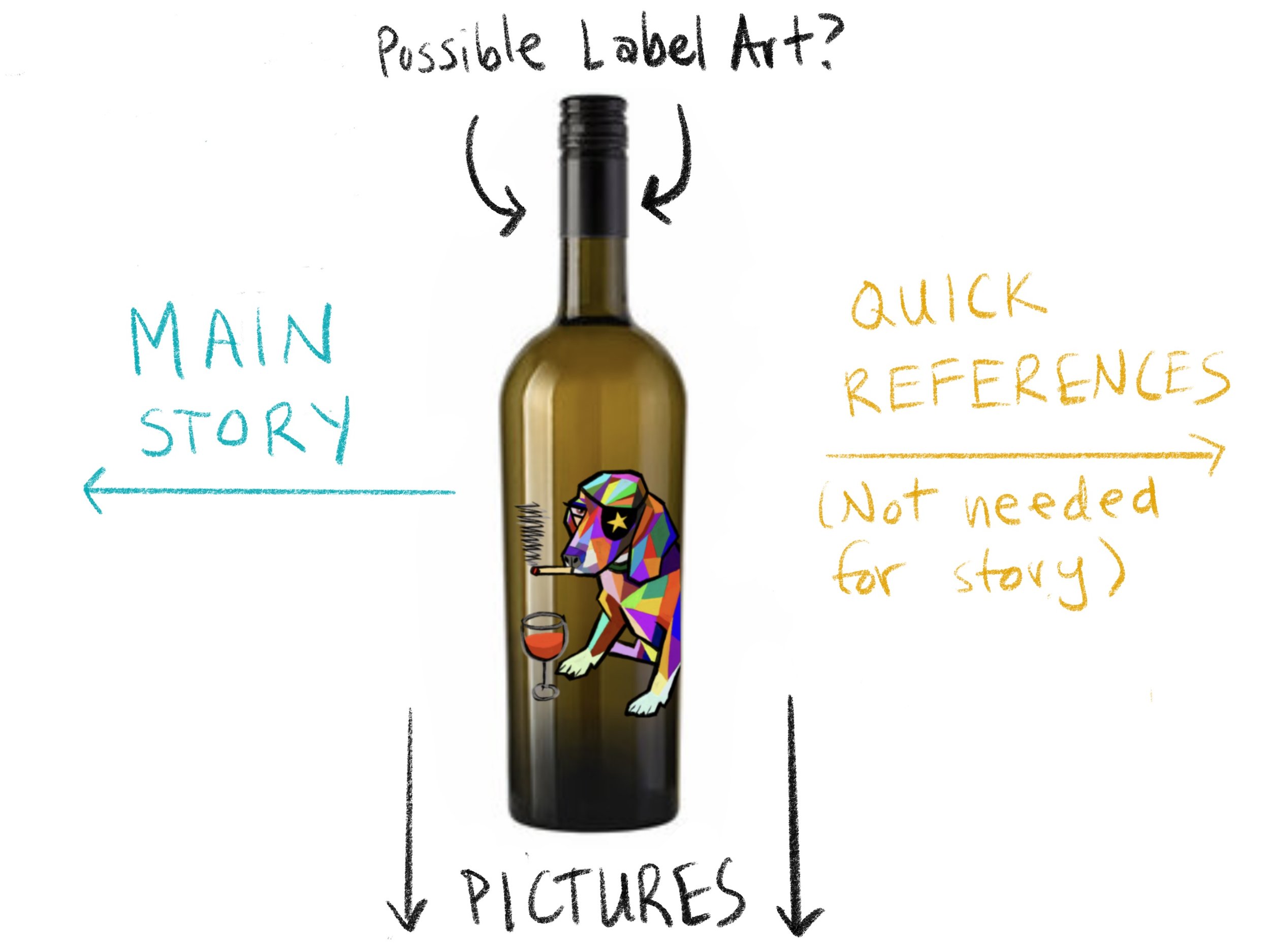
Figure 1: possible label art design, with arrows pointing to each part of the post. Art was drawn by me on Procreate for iPad.
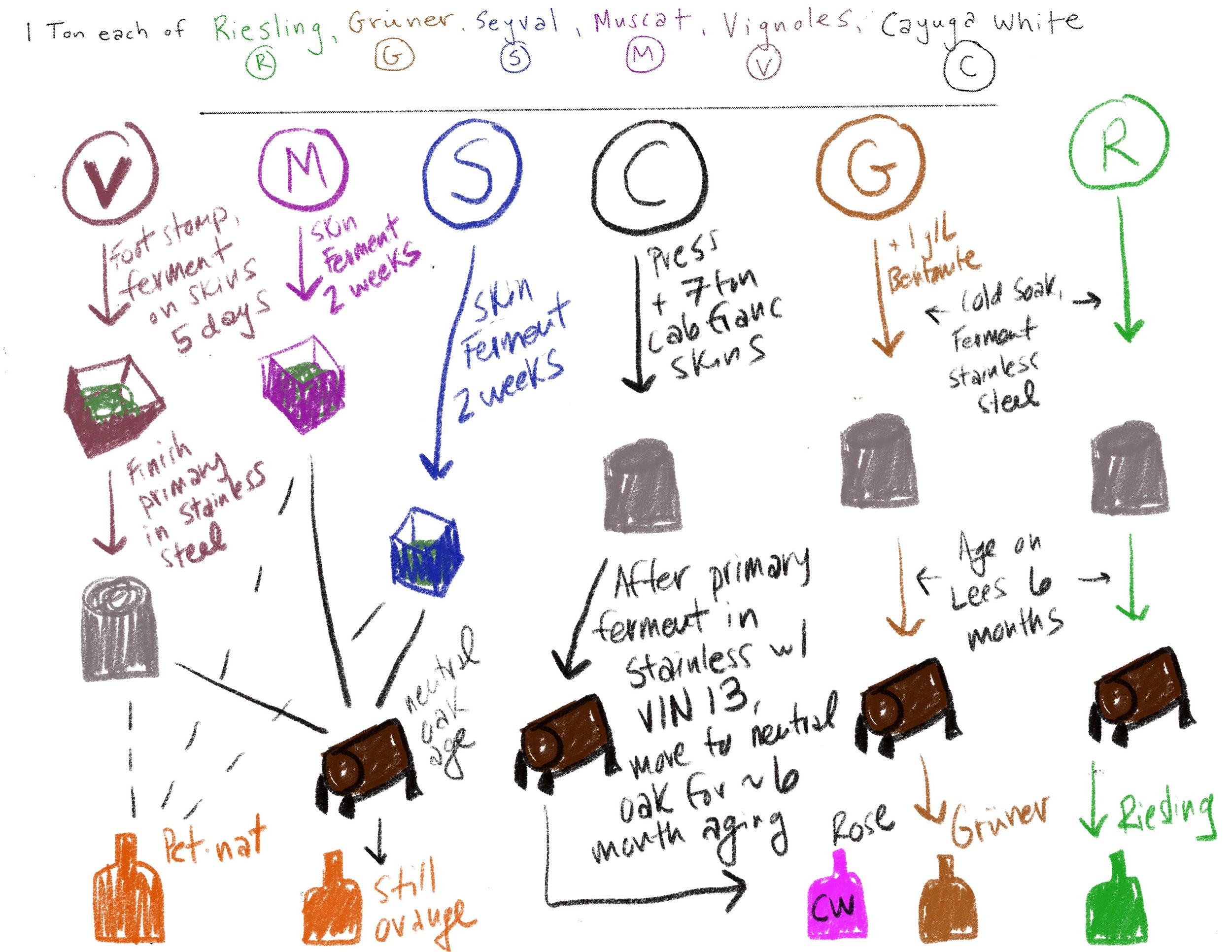
Figure 2: updated (messy) plan of cellar logistics
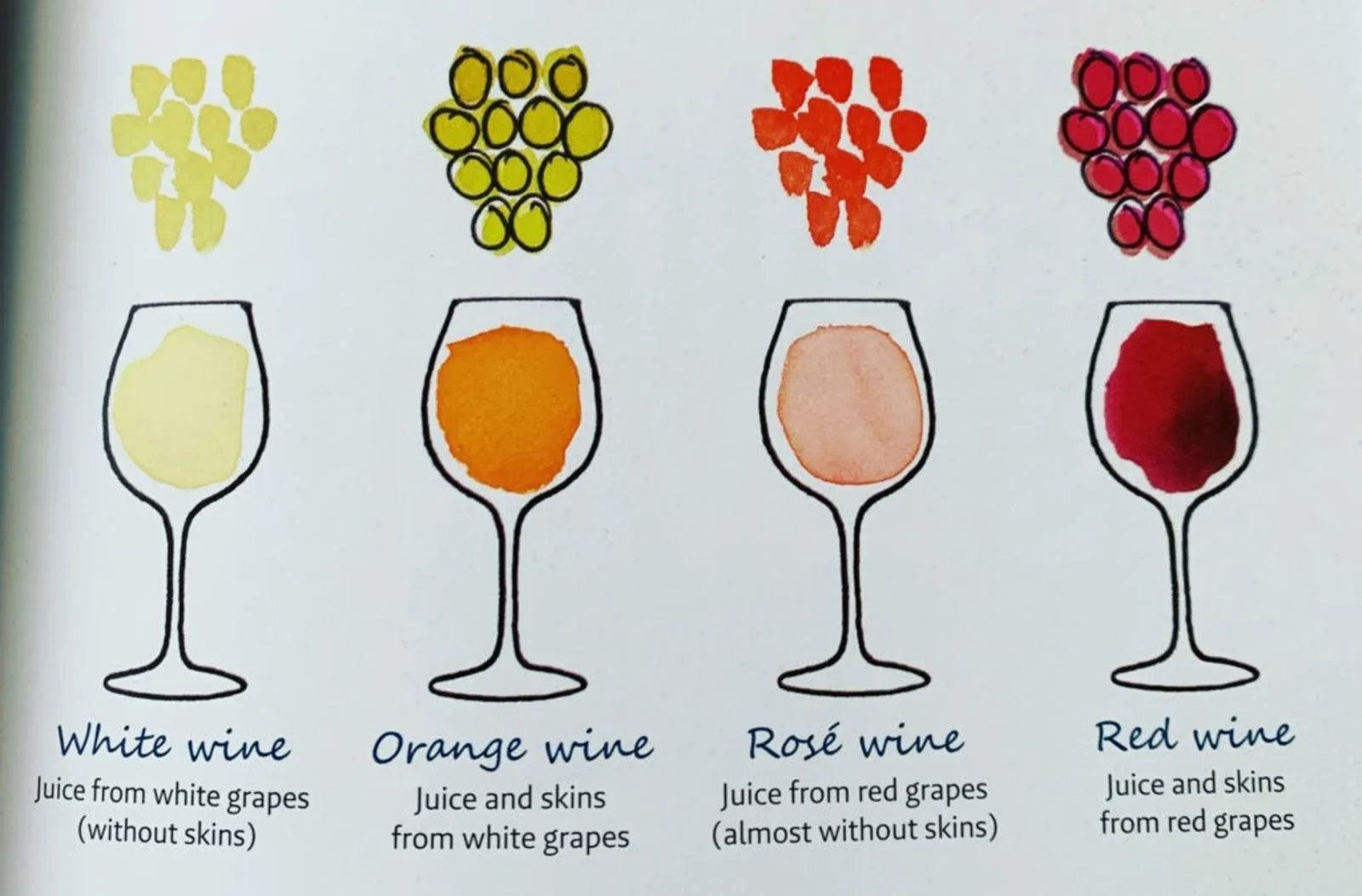
Figure 3: Brief descriptions of general four wine types.
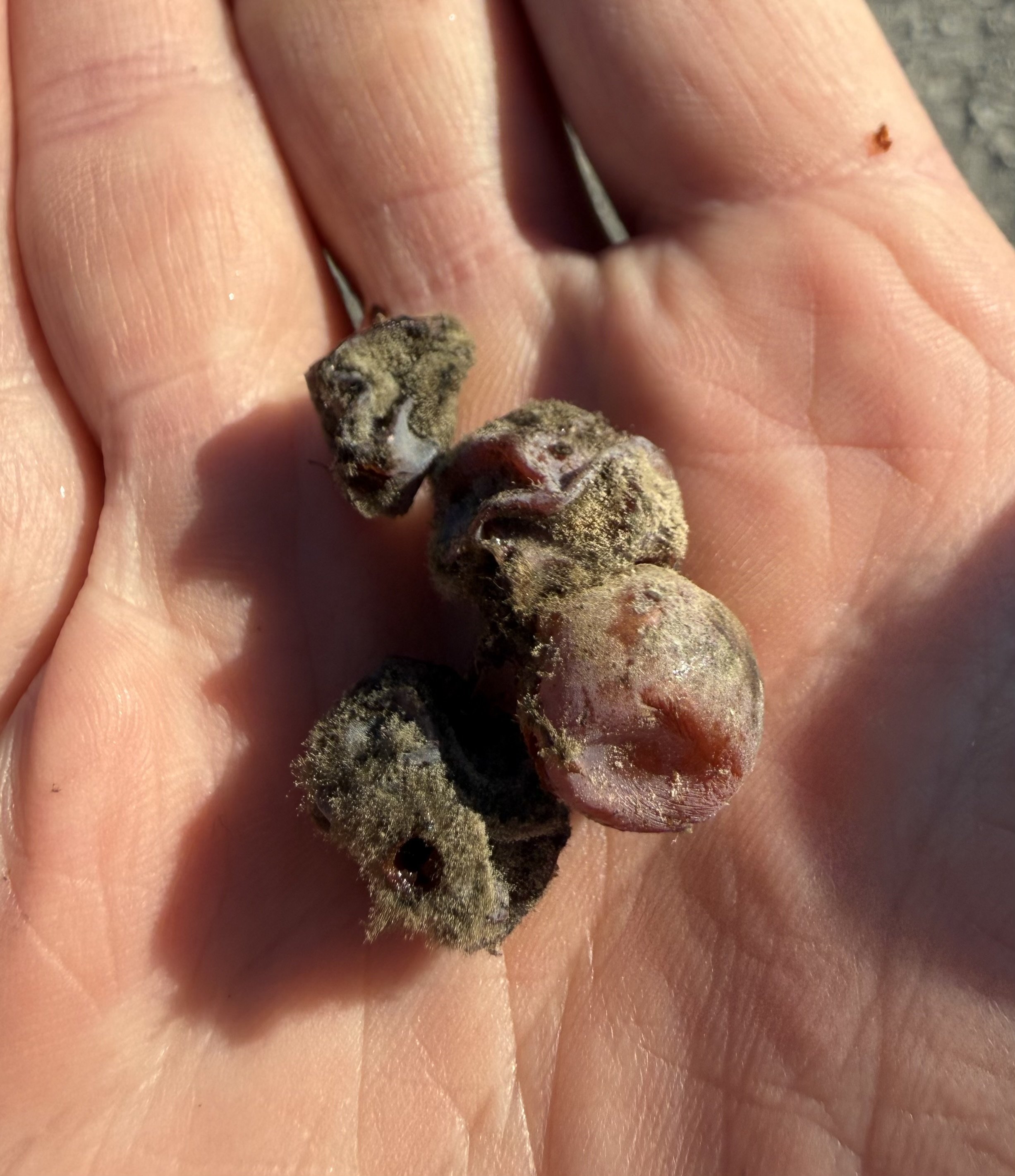
Figure 4: Botrytis on merlot berries
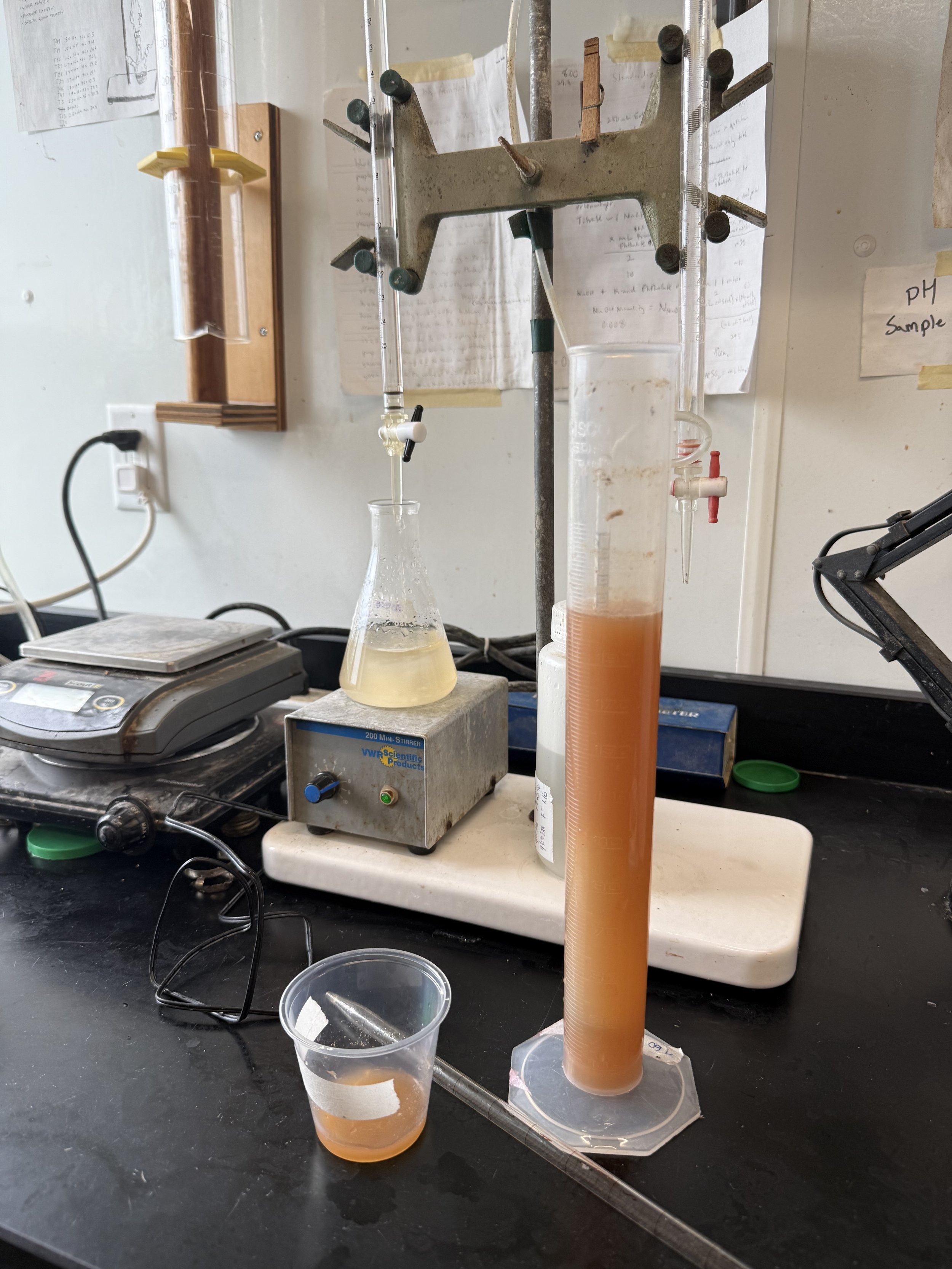
Figure 5: Measuring Titratable Acidity (TA) in my Vignoles after skin contact. Notice the orange color!
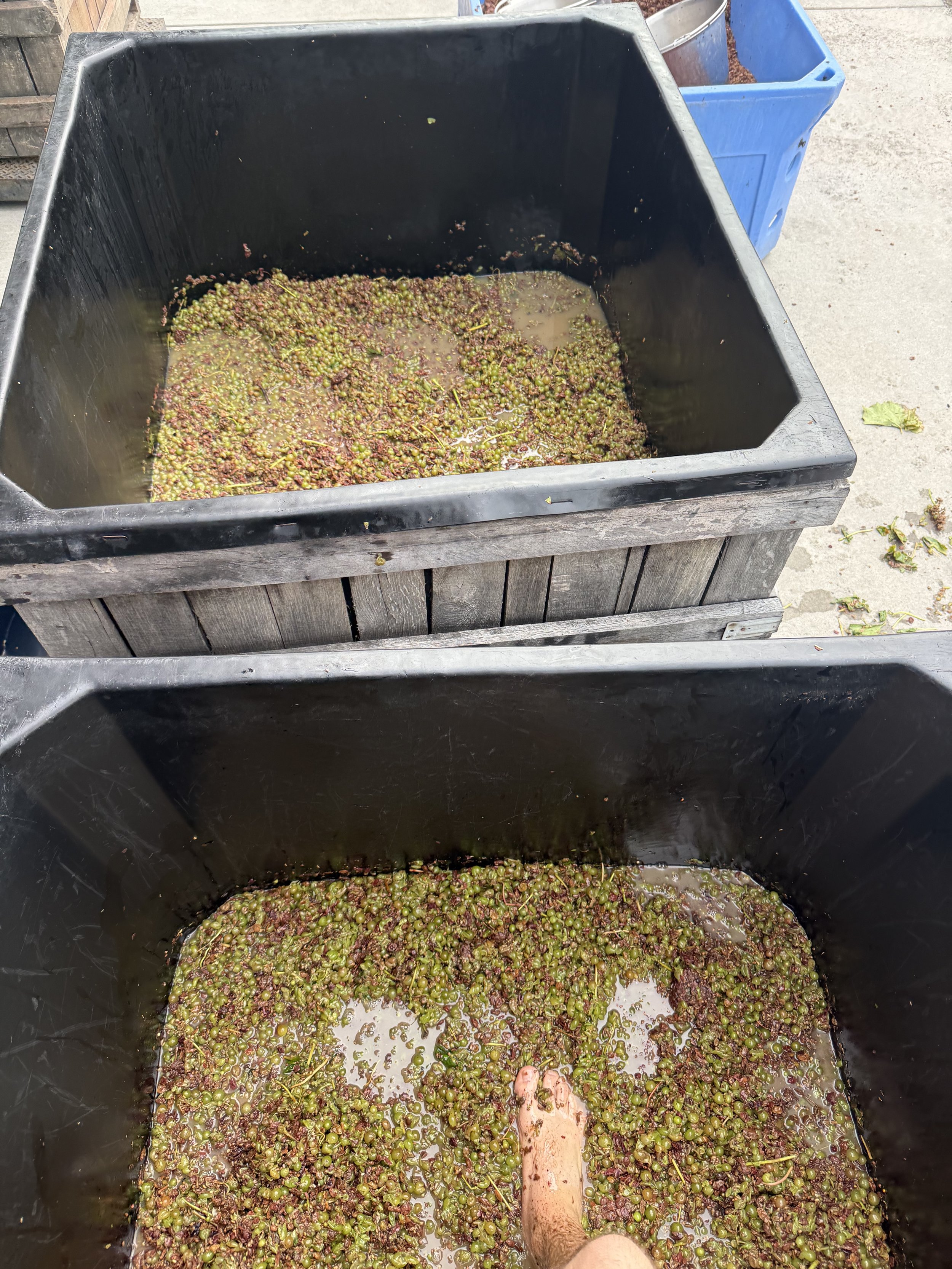
Figure 6: Stomping on some vignoles (the green ones) with pressed Pinot Gris/Gewurztraminer (the red ones) before starting fermentation on the skins.
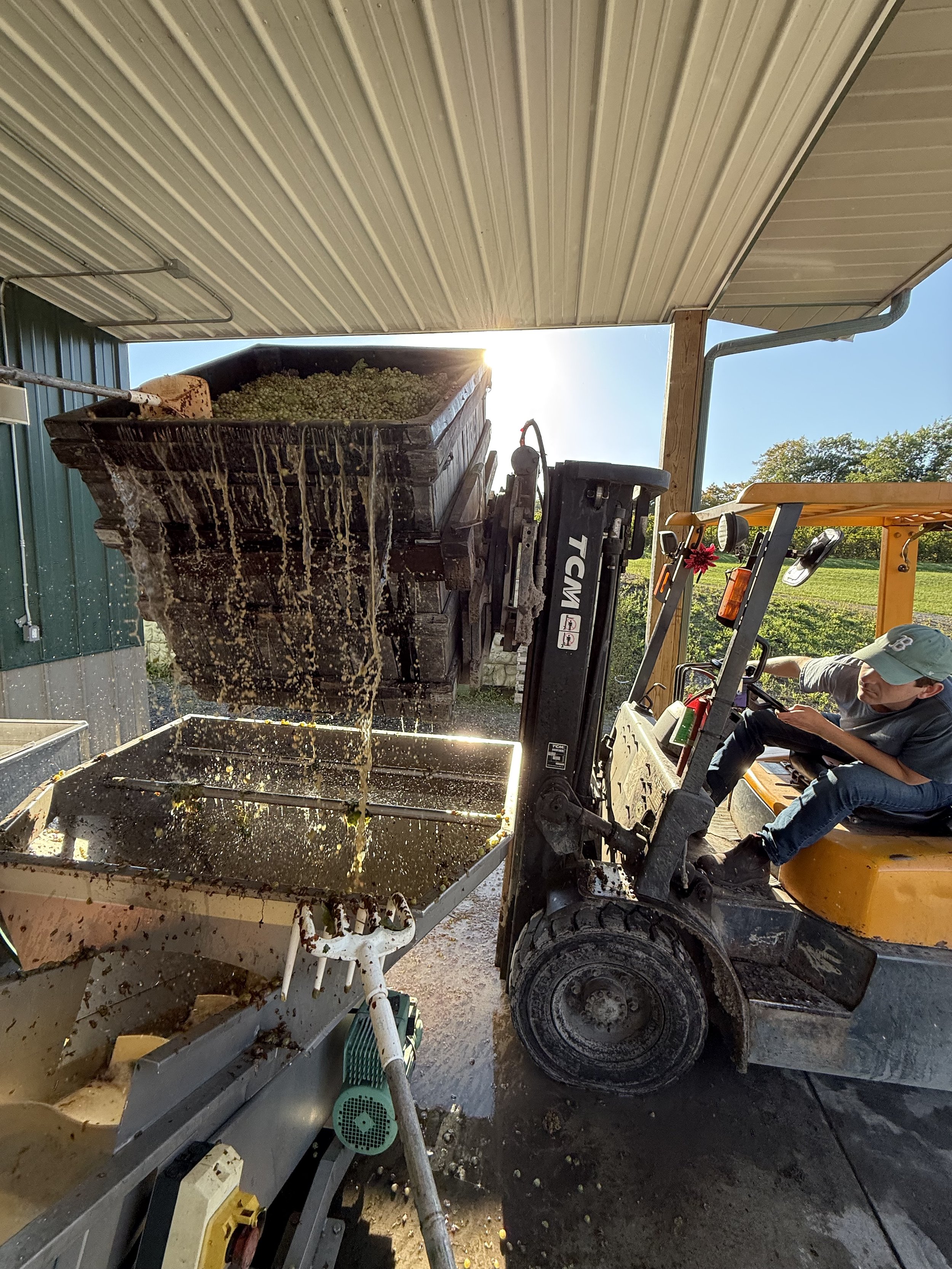
Figure 7: Kelby adding his Riesling to the elevator with some nice sunlight. Doesn’t add to the story, just a nice picture.
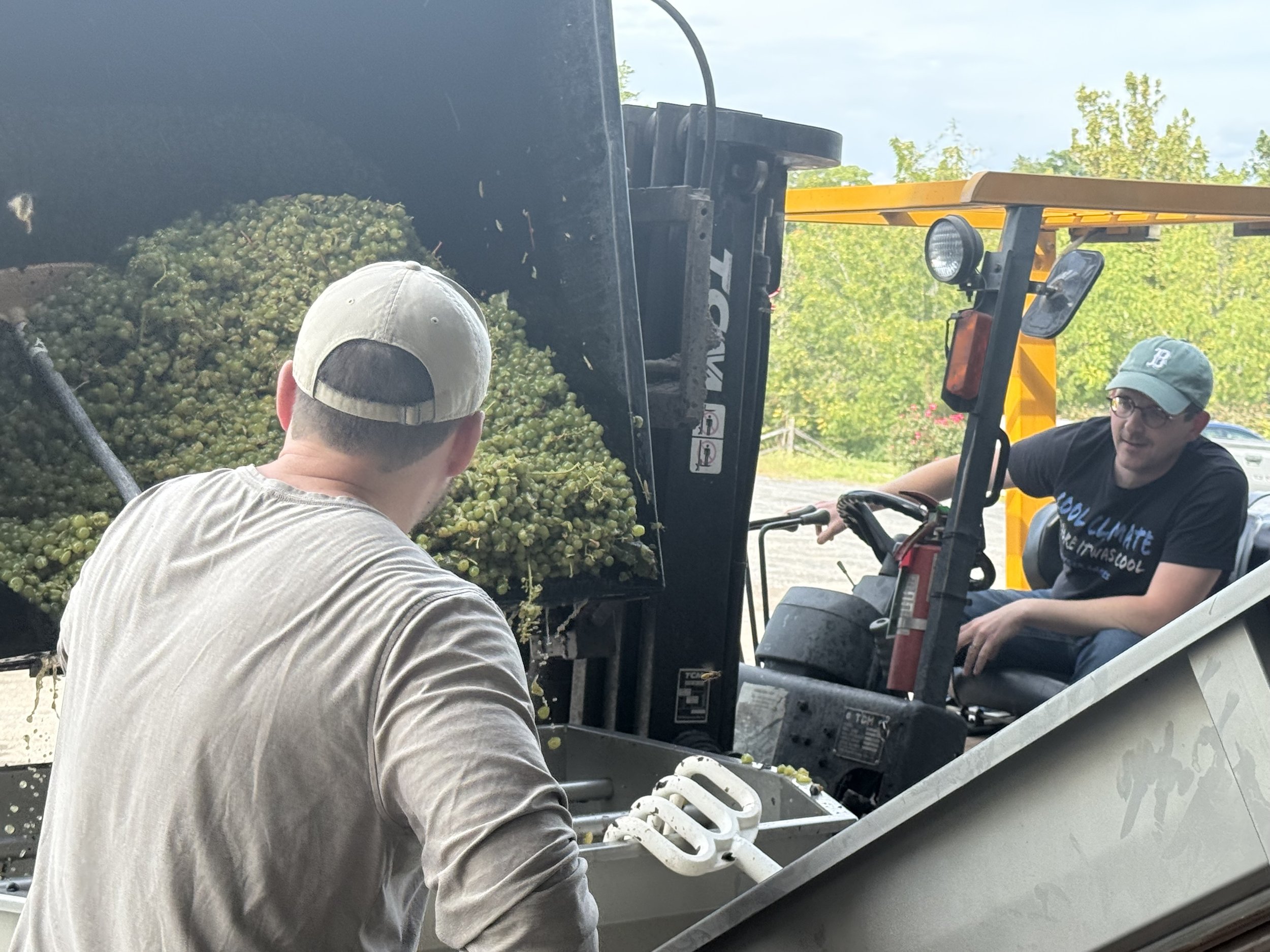
Figure 8: Adding my Cayuga White to an elevator that takes the fruit up to a big press. Notice the color of these grapes in comparison to the next photo (what comes out of the press)
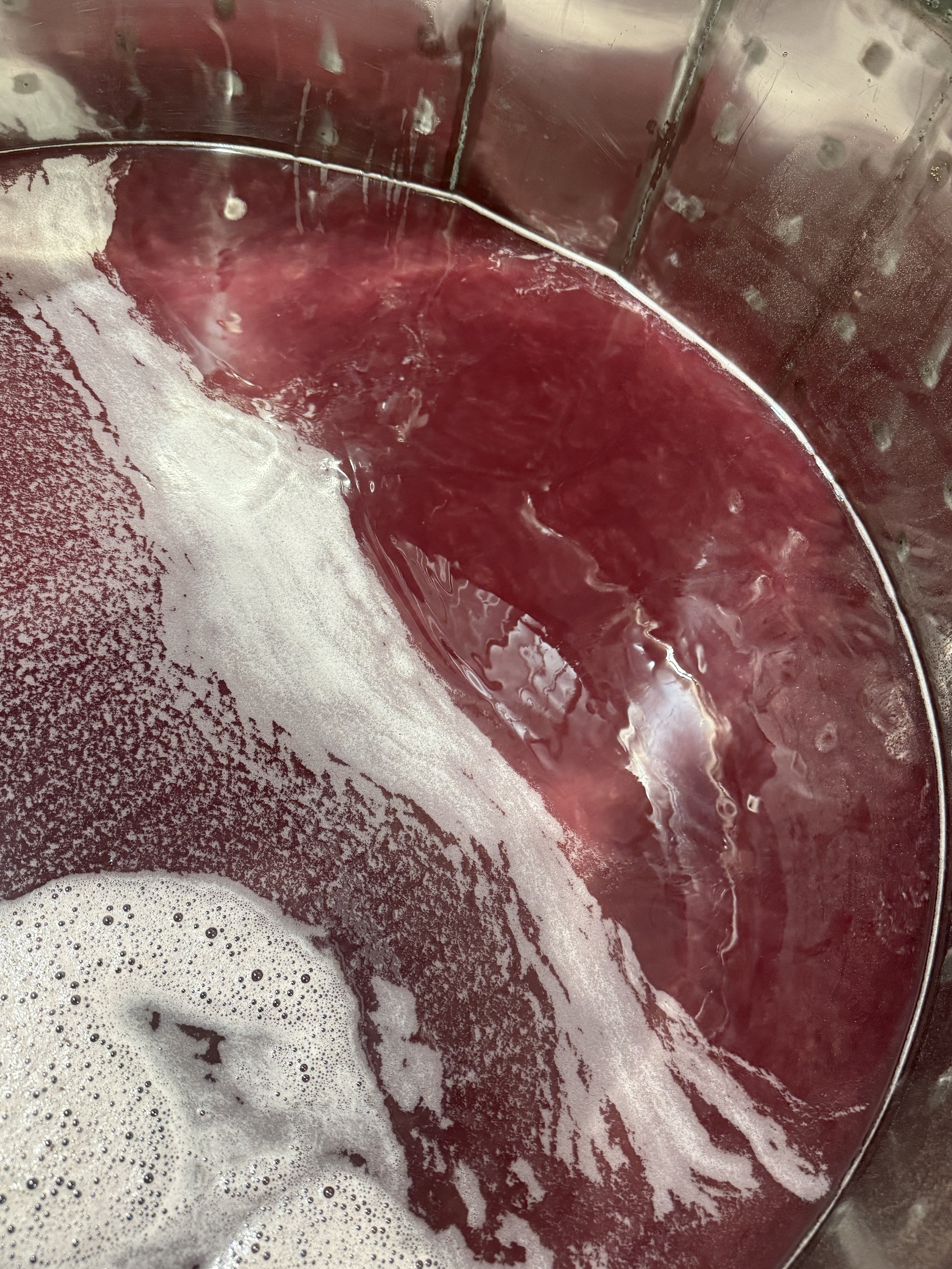
Figure 9: Cayuga White juice after being pressed on top of 7 tons of cab franc skins.
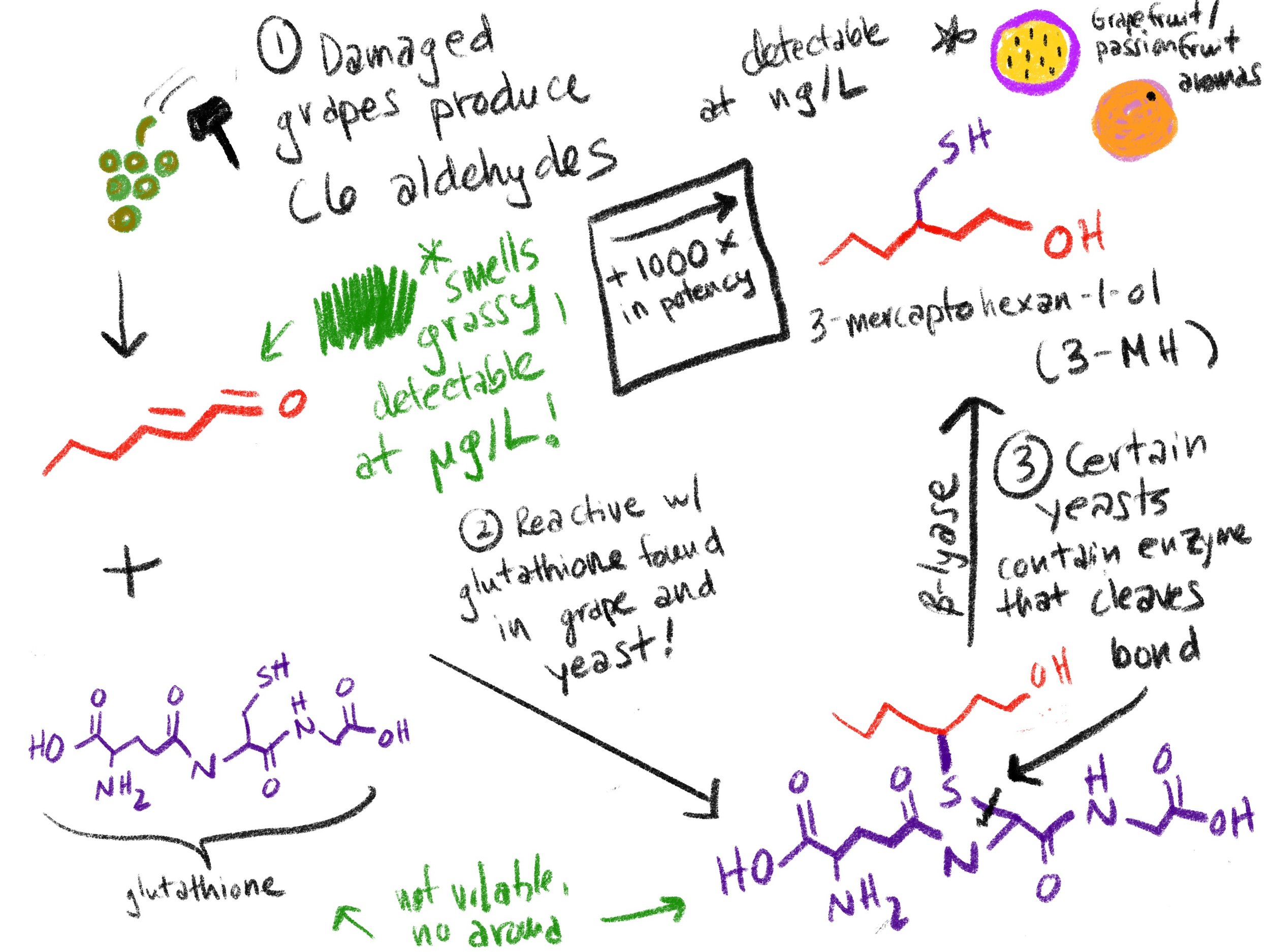
Figure 10: an example of a hand-waived mechanism of one of the reaction pathways which is being attempted at.
Figure 11: Booker in the vineyard. Confirmed dog.
Nerdy notes
[1] Orange wine
In normal white winemaking, grapes are pressed right away and only the juice ferments. In orange wine (also called skin-contact or amber wine), the skins stay in for days, weeks, or even months.
Skins hold most of a grape's color, tannin, and aroma, so time on them pulls all of that into the wine. White grape skins have no red pigment, so the result is gold to amber instead of red. It's one of the oldest ways to make wine: Georgia has fermented wine on its skins in buried clay vessels called qvevri for thousands of years.
Sources: UNESCO: Ancient Georgian traditional qvevri winemaking method; AWRI: Pre-fermentation skin contact in white wines (Godden, 2020)
[2] Hybrid grapes vs. vinifera
Nearly every famous wine grape (Chardonnay, Pinot Noir, Riesling, Cabernet Sauvignon) belongs to one European species, Vitis vinifera. Centuries of winemaking have given each of them a well-known "varietal character," the textbook taste drinkers expect.
North America has its own wild grape species, like Vitis riparia and Vitis labrusca. They evolved with harsh winters and local pests and diseases, so they're tough. Wine from some of them, though, can taste "foxy," like grape jelly. That's the flavor of Concord grape juice, and it comes mostly from a compound called methyl anthranilate.
Hybrids cross the two to get the best of both (in theory): vinifera's wine flavors with American cold hardiness and disease resistance. Many, like Seyval Blanc and Vignoles, were bred by French breeders in the 1900s. Others came from Cornell: Cayuga White (Seyval Blanc × Schuyler) was released in 1972, and Valvin Muscat in 2006. Because they need less spraying and survive cold winters, they're a big deal in the Finger Lakes (though the wines made from these grapes haven't historically stood up to Riesling, etc.). And because they're less famous, there's no textbook version of them yet, which leaves winemakers a lot of room to play.
Sources: Cornell: Grape varieties named at the NY State Agricultural Experiment Station; Cornell Chronicle: Cornell releases three new wine grape varieties (2006); Yang et al., A key 'foxy' aroma gene is regulated by homology-induced promoter indels in 'Concord' (Horticulture Research, 2020)
[3] Botrytis and sour rot
Botrytis cinerea is a fungus that thrives in damp weather. Usually it causes bunch rot (gray rot): musty, moldy flavors.
Under rare conditions (misty mornings, then dry, sunny afternoons), the same fungus becomes "noble rot." It shrivels the grapes and concentrates their sugar, which is how Sauternes and Tokaji get made. In a humid Finger Lakes fall, you mostly get the bad kind.
Sour rot is a related but separate problem, and a lot of what we know about it comes from Cornell. Research by Megan Hall and Wayne Wilcox showed it takes a whole team: a wounded berry, wild yeast that turn the sugar into alcohol, acetic acid bacteria that turn that alcohol into vinegar, and fruit flies, without which the disease doesn't develop. Fun fact: their field trials were run on Vignoles.
Sources: Hall et al., Grape sour rot: a four-way interaction involving the host, yeast, acetic acid bacteria, and insects (Phytopathology, 2018); Hall, Loeb & Wilcox, Etiology and management of sour rot in grapes (APS, 2016); Magyar, Botrytized wines review (2011)
[4] Titratable acidity (TA)
TA is the total amount of acid in a wine, measured by slowly neutralizing a sample with a base (that's the "titration"). It's reported in grams per liter, as if all the acid were tartaric acid. The two main acids in grapes are tartaric and malic, the same acid that makes green apples sour.
TA tracks how sour a wine tastes better than pH does. Most finished white wines land around 6 to 8 g/L, so my Vignoles at 18 g/L at harvest (and still 14 after skin contact) is very high.
Source: Virginia Tech Enology Notes: pH, potassium, and titratable acidity
[5] Why sparkling wine needs high acid
In the traditional (Champagne) method, you first make a still "base wine." Then you add sugar and yeast and seal it in a bottle. The second fermentation makes the bubbles and adds roughly 1.2 to 1.5% alcohol.
That extra alcohol means the base wine has to start low in alcohol, so the grapes are picked early, when sugar is low and acid is naturally high. Grapes for sparkling wine are usually the first picked each year for exactly this reason. The extra acid is also needed post carbonation to retain the perception of acidity/brightness.
Source: Advancing sparkling wine in the 21st century (Fermentation, 2025)
[6] How later picking lowers acidity
As grapes ripen, they burn malic acid for energy, faster in warm weather. The berries also take on water and sugar and swell, which dilutes the acid that's left.
The amount of tartaric acid in each berry stays roughly the same, so most of the drop comes from malic acid. The result: as harvest goes on, sugar rises and acidity falls.
Sources: Sweetman et al., Regulation of malate metabolism in grape berry and other developing fruits (Phytochemistry, 2009); Sweetman et al., Metabolic effects of elevated temperature on organic acid degradation in ripening Vitis vinifera fruit (J. Exp. Botany, 2014)
[7] How skin contact lowers acidity
Grape skins are rich in potassium. During skin contact, potassium moves into the juice and pairs up with tartaric acid to form potassium bitartrate, better known as cream of tartar (yes, the baking ingredient).
Cream of tartar doesn't dissolve well, especially in cold liquid or once alcohol is present. So it crystallizes and drops out, taking some acid with it. Those same crystals are the "wine diamonds" you sometimes find on the bottom of a cork. Studies consistently find that skin contact raises juice pH and potassium and lowers TA. The trade-off is that higher pH makes the wine a little less protected against spoilage.
Sources: AWRI: Pre-fermentation skin contact in white wines (Godden, 2020); UC Davis: The general relationship between potassium, sodium, and pH in grape juice and wine
[8] Why Pinot Gris and Gewürztraminer skins make a true orange wine/color
Pinot Gris and Gewürztraminer make white wines, but their grapes aren't green. Pinot Gris is a color mutation of Pinot Noir with grayish-pink skin, and Gewürztraminer is a pink-skinned member of the Traminer family.
That pink comes from anthocyanins, the same red pigments in red grapes, just in much smaller amounts than in Pinot Noir. On skin contact, that little bit of red layers over the gold-amber that white-grape skins give, and the result lands on copper-orange instead of plain gold or outright pink. Friuli (the grape variety), in northeast Italy, has a whole tradition built on this: ramato ("copper") Pinot Grigio, made by leaving the juice on its pinkish skins.
Sources: Negri et al., Proteomic and metabolic traits of grape exocarp to explain different anthocyanin concentrations of the cultivars (Frontiers in Plant Science, 2015); Decanter: What is ramato wine?
[9] Ripe vs. unripe tannin
Tannins are a family of compounds that come from grape skins and seeds (and oak barrels). The small ones taste bitter. The larger ones mostly feel drying, like oversteeped black tea.
In ripe grapes, the seeds turn brown and woody and give up less tannin, and the skin tannins are larger and feel softer. In unripe grapes, the green seeds release tannin easily, and more of it is the small, bitter kind. Alcohol pulls tannin from seeds much better than juice does, so once a skin-contact wine starts fermenting, bitterness can build fast.
Sources: Kennedy et al., Development of seed polyphenols in berries from Vitis vinifera L. cv. Shiraz (Aust. J. Grape Wine Res., 2000); Kennedy et al., Composition of grape skin proanthocyanidins at different stages of berry development (J. Agric. Food Chem., 2001); Peleg et al., Bitterness and astringency of flavan-3-ol monomers, dimers and trimers (J. Sci. Food Agric., 1999)
[10] Pressing off and native yeast
"Pressing off" means squeezing the liquid out and leaving the skins and seeds behind, which ends the skin contact.
A native (or spontaneous) fermentation is one where nobody adds yeast. The yeast already living on the grapes, the equipment, and in the winery does the work. A mix of wild yeast species usually gets things started, and the classic wine yeast, Saccharomyces cerevisiae, takes over as alcohol builds. It can add complexity, but it's less predictable than adding a chosen commercial strain (see note 20).
[11] Natural wine
"Natural wine" has no legal definition in the US. The general idea: farm organically, pick by hand, ferment with native yeast (note 10), and add or take away as little as possible. The biggest dividing line is sulfur dioxide (note 13). Many natural winemakers add very little, or none at all.
France came closest to an official definition in 2020 with Vin Méthode Nature: organically grown, hand-picked grapes, native yeast, no SO2 before or during fermentation, and at most 30 mg/L added just before bottling (or none, for the "no added sulfites" version).
One thing worth knowing: truly sulfite-free wine basically doesn't exist. Yeast make a little SO2 on their own during fermentation, so even a wine with nothing added still contains some.
Sources: Decanter: Natural wine receives formal recognition in France as 'Vin Méthode Nature' (2020); A.L. Waterhouse, UC Davis: Sulfites
[12] What oxidized wine smells like, and why
Oxidized wine smells like bruised or cut apple, cider, nuts, or sherry. Oxidized whites also darken, sliding from gold toward amber and brown.
The main culprit is acetaldehyde, and it forms in a surprisingly roundabout way. Oxygen doesn't attack wine directly. Trace amounts of iron and copper act as middlemen, helping oxygen react with the wine's phenolic compounds. That turns some phenolics into quinones (which drive browning) and produces hydrogen peroxide. The peroxide then reacts with iron to make a hydroxyl radical, one of the most reactive molecules in chemistry. Wine is mostly water and ethanol, so ethanol is what the radical mostly hits, and oxidized ethanol is acetaldehyde.
Sources: Waterhouse, Recent observations in wine oxidation (Macrowine, 2010); Bueno et al., Formation and accumulation of acetaldehyde and Strecker aldehydes during red wine oxidation (Frontiers in Chemistry, 2018); Kreitman et al., Reaction mechanisms of metals with hydrogen sulfide and thiols in model wine, Part 2 (J. Agric. Food Chem.)
[13] Sulfur dioxide (SO2)
Sulfur dioxide is the most widely used wine preservative. Winemakers add it as a gas, a solution, or a powder (potassium metabisulfite).
In the US, wine can't exceed 350 mg/L total SO2, and anything over 10 mg/L needs a "Contains Sulfites" label. The average wine has around 80 mg/L, or about 10 mg per glass.
Sources: AWRI: Understanding molecular SO2; A.L. Waterhouse, UC Davis: Sulfites; Jackowetz, Li & Mira de Orduña, Sulphur dioxide content of wines: the role of winemaking and carbonyl compounds (Appellation Cornell, 2011)
[14] Your body makes SO2 too
According to UC Davis wine chemist Andrew Waterhouse, the human body produces about 1,000 mg of sulfite every day as a normal part of metabolism. A glass of wine has about 10 mg. For comparison, a 2-ounce serving of brightly colored dried apricots can have over 100 mg.
That doesn't mean sulfite sensitivity isn't real. A small number of people, including some with asthma, genuinely react to sulfites. But for most people, the sulfites in a glass of wine are a rounding error next to what their own bodies make.
Source: A.L. Waterhouse, UC Davis: Sulfites
[15] What SO2 actually does for wine
• It cleans up after oxygen. SO2 doesn't stop oxygen from reacting with wine. Instead, it destroys hydrogen peroxide before it can turn ethanol into acetaldehyde an inhibits compounds which accelerate formation of hydrogen peroxide.
• It hides oxidized aromas almost instantly. Free SO2 binds acetaldehyde into an odorless compound, and the reaction is fast. That's why a small dose can clean up a bruised-apple aroma in seconds.
• It keeps microbes in check. Molecular SO2 inhibits spoilage yeast and bacteria. About 0.6 mg/L molecular SO2 is a common target for white wines. Since that fraction shrinks as pH rises, higher-pH wines need more free SO2 for the same protection.
• The trade-offs: too much smells like a struck match, and SO2 can block malolactic fermentation (bacteria converting sharp malic acid to softer lactic acid). Sometimes that's the goal, and sometimes it's a problem.
Sources: Waterhouse, Recent observations in wine oxidation (2010); The use of SO2 to bind acetaldehyde in wine: sensory implications (S. Afr. J. Enol. Vitic.); AWRI: Understanding molecular SO2
[16] Cold soak
A cold soak means holding juice on grape skins at a cold temperature before fermentation starts. The cold keeps yeast from getting going.
Without alcohol, the juice pulls color and aroma out of the skins but not much tannin, since tannin dissolves much better in alcohol. It's a similar idea to cold-brew coffee: cold water pulls flavor with fewer of the bitter compounds hot water would grab. Pressed red skins still hold plenty of pigment, which is why soaking white juice on them can make a rosé.
Source: AWRI: Pre-fermentation skin contact in white wines (Godden, 2020)
[17] What decides a rosé's final color
Rosé's pink comes from anthocyanins, the red pigments in red grape skins. They're fragile, and several things work against them:
• Yeast: during fermentation, yeast cell walls soak up pigment, which settles out with the spent yeast.
• Sulfur dioxide: the most common wine preservative (note 13) bleaches some anthocyanins.
• pH: at lower pH (more acidic), anthocyanins look redder and brighter. At higher pH they turn purplish and fade.
• Time and oxygen: red wines hold their color because anthocyanins bond with tannins into sturdier pigments. Rosé has very little tannin to bond with, so its color tends to drift toward orange as it ages.
The very high acid in Cayuga White should help keep the pink brighter.
Sources: Influence of yeast on anthocyanin adsorption and stable pigment formation (Frontiers in Microbiology, 2019); Fate of anthocyanins in the presence of inactivated yeasts and yeast cell walls during simulated wine aging (2018)
[18] Why crushed grapes smell grassy
When grape cells break, enzymes start chopping up fats from the cell membranes. With oxygen around, this makes a group of six-carbon compounds (C6 aldehydes and alcohols, like hexanal and hexenal).
These are the same compounds you smell when you mow the lawn. A long soak with crushed fruit gives this reaction more time to run, and the effect is stronger when the fruit isn't fully ripe. During fermentation, yeast turns many of the aldehydes into alcohols, which smell milder but still green.
Sources: AWRI: Pre-fermentation skin contact in white wines (Godden, 2020); C6 volatiles and the lipoxygenase-hydroperoxide lyase pathway in grape berries (Molecules, 2017)
[19] Thiols and New Zealand Sauvignon Blanc
Thiols are sulfur-containing aroma compounds that we can smell at incredibly tiny amounts, a few billionths of a gram per liter. The big ones in Sauvignon Blanc, with roughly the lowest concentration people can smell:
• 3MH (3-mercaptohexanol): grapefruit, passion fruit (about 60 ng/L)
• 3MHA (3-mercaptohexyl acetate): passion fruit, guava (about 4 ng/L)
• 4MMP: boxwood and blackcurrant (and, at high levels, Sauvignon Blanc's infamous "cat pee") (about 0.8 ng/L)
One route to the 3MH precursor starts with a grassy C6 compound from note 18, (E)-2-hexenal, which reacts with glutathione in the juice. Isotope-tracing studies suggest this route is a minor contributor overall, though, so the grassy-to-tropical link is real but modest. Machine harvesting and long trips to the winery, both common in New Zealand, damage berries and are linked to higher levels of these precursors. But oxygen along the way works against you: in a New Zealand study, Sauvignon Blanc juice that was transported with little or no SO2 came in more oxidized and made wines with more grassy C6 alcohols but much lower thiols. Juice protected with SO2 at harvest made the most thiols (Makhotkina et al., Am. J. Enol. Vitic., 2013). In other words, the same oxygen that makes juice smell grassy can cost it tropical aroma, which is one more job for SO2 (note 15).
Sources: Capone & Jeffery, Effects of transporting and processing Sauvignon Blanc grapes on 3-mercaptohexan-1-ol precursor concentrations (J. Agric. Food Chem., 2011); Capone, Black & Jeffery, Effects on 3MH precursor concentrations from prolonged storage of Sauvignon Blanc grapes (J. Agric. Food Chem., 2012); Subileau et al., New insights on 3MH biogenesis in Sauvignon Blanc wines (J. Agric. Food Chem., 2008)
